Mostrando postagens com marcador CVR. Mostrar todas as postagens

sábado, 18 de janeiro de 2025

JEJU AIR 7C2216 CVR and FDR LAST 4 MINUTES RECORDINGS OUT - POSSIBLE EVENT - CROSS BUS TIE RELAY NOT OPENED


On the very moment the GLIDE SLOPE is intercepted the CROSS BUS TIE RELAY automatically opens.


 The CROSS BUS TIE RELAY opens to isolate the navigation receivers and Flight Control Computers. The RELAY opening prevents all approach phase data be removed from FDR because of only one electrical failure.


The CROSS BUS TIE RELAY also opens when the BUS TRANSFER switch is moved to OFF.

 If NORMAL power sources to DC BUS fail, the emergency source of DC power is the batteries.

 If both generators come disconnected from the BUS TRANSFER BUS, the AUTOPILOT disengages and it can't be ENGAGED up to the generators are available. The plane must be piloted MANUALLY. It will be hard work.

With no electrical source available, the batteries can supply electrical power up to minimum of 60 minutes.

UPDATED UPON PRELIMINARY REPORT Jan 27, 2025


Cockpit Voice Recorder

The cockpit voice recorder uses four independent channels to record flight deck audio for 30 minutes or 120 minutes. Recordings older than 30 or 120 minutes are automatically erased. One channel records flight deck area conversation using the area microphone. The other channels record individual ACP output (headset) audio and transmissions for the pilots and observer. (Aircraft fit dependent) The RIPS (Recorder Independent Power Supply) provides power to the cockpit voice recorder for 10 minutes after aircraft power is interrupted either by normal shutdown or by any other loss of power. Normal power supply 115V TRANSFER BUS 2 and 28 V from DC BUS 2.

VOICE RECORDER Switch (when fitted):

AUTO - powers the cockpit voice recorder from first engine start until 5 minutes after last engine shutdown

ON - powers the cockpit voice recorder until the first engine start, then trips the switch to AUTO. On aircraft with no switch the voice recorder is active anytime 115V AC is applied to airplane.

As soon as the aircraft has intercepted the LOCALIZER course, following that the pilot attention will be on GLIDE SLOPE interception.

BATTERY POWER

Emergency source for:

- Static Inverter/AC Standby Bus

- DC Standby Bus

- Battery Bus

- Hot Battery Bus

- Switched Hot Battery Bus

The Static Inverter changes 24 DC power to 115 AC power for the AC STANDBY BUS.

The HOT BATTERY BUS is always connected to the battery, and all its components operate as long as the battery voltage is above a minimum value.

The pilot must move the BUS TRANSFER switch to OFF position and turn off the HIDRAULICS ELECTRIC PUMPS.

After trying to restore the generators, if both GEN OFF BUS (L & R) lights stay ON, the pilot must land the plane ASAP.


The CVR is a customer option, popular choices are the L-3 FA2100 and Honeywell 980-6020/980-6022. Both manufacturers offer these with a crash survivable memory unit (CSMU) for protection of the solid state voice recording memory. The capacity of the CSMU is a customer option, legally the state of registration may only need 30 minutes. The CSMU retains the most recent 30 or 120 minutes of audio, digital, and timing information. Unless you know the part number of the CVR installed, you will not know if it is a 30 minute or 120 minutes capacity, they look identical.

Another customer option is the overhead "Voice Recorder" switch, with ON and AUTO positions. If it has that switch it should shut down 5 minutes after the engines are shut down (based upon oil pressure), if it does not have that optional auto switch it can record whenever 115V is supplied.


quarta-feira, 27 de abril de 2022

EGYPTAIR FLIGHT 804 CRASH - The pilot's lit cigarette combined with leaked oxygen


EgyptAir flight from Paris to Cairo crashed in 2016, killing all 66 people on board.

April 26, 2022

When the Airbus A320 disappears the first thought is to a terrorist attack.

Airbus A320, registered SU-GCC, died when it crashed into the Mediterranean Sea. Egyptian authorities have never published a final report into the crash. 

French air accident investigators from the BEA stated on July 6, 2018 that they considered “the most likely hypothesis is that a fire broke out in the cockpit while the airplane was flying at its cruise altitude and that the fire spread rapidly resulting in the loss of control of the airplane.” 

The captain or first officer had been smoking at 37,000ft shortly before the crash.

In a 134-page official report, which was sent to the Court of Appeal in Paris last month, investigators said the fire may have broken out in the cockpit due a combination of a lit cigarette and the escape of oxygen from the co-pilot’s mask.

The fire started after the pilot's lit cigarette combined with leaked oxygen, the report said.


A 134-page document submitted to the Court of Appeals in Paris last month said investigators determined that the burning cigarette combined with escaping oxygen from the co-pilot's mask and caused a fire on board Flight 804.

The French air accident investigation agency had said previously that a cockpit fire likely caused the crash; Egyptian authorities initially claimed it was a terrorist bombing. 

The French BEA air accident investigation agency has previously said the crash was probably caused by a cockpit fire, contradicting an earlier suggestion by Egyptian authorities that a bomb may have been the cause.

It also said that authorities in Egypt had apparently not followed up calls for further investigations. {ID:L8N1U306X]

The two experts commissioned by French judges in charge of the dossier highlighted some twenty warnings pointing to recurring faults during the plane's five flights before the crash.

Before disappearing from radar — and shortly after leaving Greek airspace — flight MS804 signals through the automatic system the presence of smoke in the front bathroom and in the lower part of the nose. Pilots do not launch any may days. The Airbus A320 is one of the most used and safe aircraft in the world. Thousands fly every day. But six years after that tragedy, the Egyptian authorities — leading the investigation by jurisdiction — have never produced any final investigation report, as advocated by international treaties. And not even preliminary.

Above Italy

At 00.11 on May 19, the jet enters Italian airspace over Livigno, a few minutes later it leaves the country from Veneto, then skirts all the Balkans and proceeds further and further south. At 01.24 — reconstruct the tracks of the specialized site Flightradar24 — he enters Greek airspace, but an hour later neither the Greek controller nor the Egyptian one manage to get in touch. At 2.30 am the Airbus disappears from the radars of both area control centers after turning a couple of times first to the left, then immediately to the right.

The seven signals

Shortly before sinking, it turns out later, the plane sent seven "dispatches" in just two seconds through the "Acars", a data communication system with the ground stations: they signal problems with the anti-icing sensors, the windows of the cockpit, the presence of smoke in the front bathroom and in the avionics compartment (under the cockpit), the stop to the operation of two computer systems crucial for flight and the one that maneuvers the wings. Neither the commander nor the first officer mentions it or asks for assistance.

The start of the investigation

Relations with the Egyptians are immediately problematic. The incident, for Cairo, is an act of terrorism and for this reason the investigation requires the acts to be secreted. The transalpine authorities find it difficult to support these theses. The dynamics of the recovered debris around the impact area, according to Western experts, excludes the explosion at altitude. The truth lies in the two black boxes, found and analyzed in the laboratories near Paris of the investigative body French Bea. But the intergovernmental agreement provides that Bea cannot disclose the information because it is not responsible for the investigation. A search warrant from the French judiciary is needed to obtain the data of the black boxes that remain known only to very few people. "From the Egyptians we received only the ritual condolences and the remains of our loved ones. Then the silence,"

The counter-investigation

A 76-page document, prepared between 2018 and 2019 by two French experts, claims that in the five previous flights that aircraft recorded about twenty warnings for more or less important technical problems – from the air intake system into the engines to the smoke detection sensors on board – "which, however, were not reported by the pilots and therefore not analyzed by EgyptAir maintenance", it reads. Egyptian civil aviation denies the existence of technical problems. "Before its penultimate flight (from Cairo to Paris, ed) the plane should not have taken off without extensive control," the two experts write. However, they conclude that it is not possible to identify a root cause.

The French version

A spokesman for Bea explains that the official position of the investigative body French remains that of July 6, 2018. With a press note – at times very harsh – the agency claims that "the most likely hypothesis of the accident is that it was caused by a fire that broke out in the cockpit during the cruise phase, which spread quickly leading to the loss of control of the aircraft". Bea also points out that "it is necessary to have a final report of the incident in order to be able to present the differences of opinion to the Egyptians as established by international norms". Having this document also serves to improve safety in the sector as it always happens after every tragedy of the skies.

Without effective cooperation from Egypt, without being able to hear the people involved in the maintenance, it becomes almost impossible to get to the bottom of this story."

Traces of oxygen

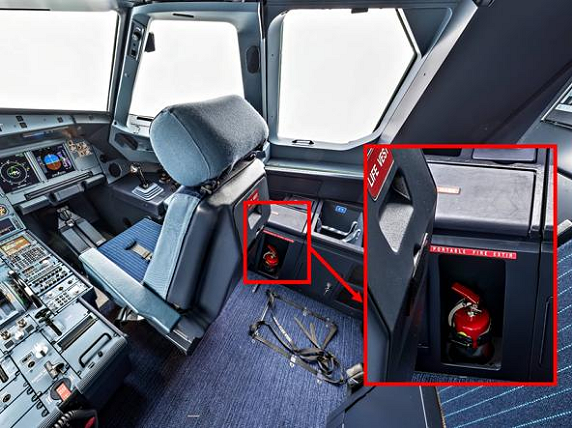
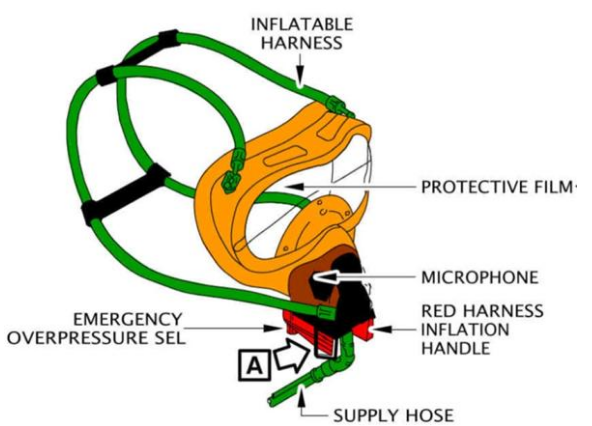
Separating the sound tracks of one of the black boxes, the "Cockpit voice recorder", the experts discover two rustles at 2.25 and 24 seconds and at 2.25 and 29 that come from the microphone embedded in the oxygen mask of the co-pilot who at that moment is in his compartment. Then two more blows, at 2.26 and 11 and at 2.26 and 24. Oxygen itself is not flammable, but promotes combustion. For this reason, immediately afterwards there is a principle of fire unleashed "by a spark or a flame". The finger is pointed at a lit cigarette, the umpteenth in that aircraft if it is true that two months earlier in the cockpit the ashtrays were replaced because they were now too used. The document cannot determine whether the pilots used a fire extinguisher or not.

The checks envisaged

"When we enter the cockpit among the various preliminary checks before taking off there is also that of controlling the flow of oxygen in the side masks", explains Daniele Veronelli, commander of A320 and member of the technical department of Anpac (National Association of Commercial Aviation Pilots) to the Courier. "You raise a door and test the air flow by pressing a button that pops out of the compartment. By operating the intercom you can feel the oxygen flowing because each mask is equipped with a microphone». If the crew is the first to set foot in the plane that day - he continues - "then this type of test is also carried out. If, on the other hand, you take over from your colleagues, the control is not provided, but nothing detracts from the fact that this is performed the same, it takes a few seconds».


Alarms

Are there oxygen signals on board? "When the levels drop, in one of the screens in front of the pilots the indication of the amount of oxygen is colored orange. If you are on the ground you do not take off, if you are in flight you have to decide whether to continue or divert to the nearest airport». The masks have a minimum of 15 minutes of autonomy. "There is a lever: if it is in the normal position the flow of oxygen is on demand. If, on the other hand, it is in the "emergency" position then it releases the air at a greater pressure to throw out of the mask the fumes that could enter in case of fire or smoke on board.

The tiredness of the pilots

In the document, among many things, there is a passage about pilots. Between 1.01 and 1.46 at night — when the aircraft passes between the coast of Croatia and over Athens, Greece — the technicians note, hearing the black boxes, that the commander and first officer show signs of fatigue. "A yawn is clearly audible at 1.01 and 53 seconds," it reads. Twelve minutes later "pilot and co-pilot clearly express that both feel tired from this night flight and lack of sleep." Same concept repeated at 1.46. But the documents compiled, the experts explain, "indicate that the rest times for both have been respected".

ICAO, the UN civil aviation agency, explains that it has not received any final report from Cairo. Bea, the investigative agency French, confirms the position expressed in 2018: for them the most likely hypothesis remains "a fire that broke out in the cockpit during the cruise phase that led to the loss of control of the jet".


domingo, 27 de março de 2022

PICKLE FORKS CRACKS - On youth fleet of B737 NG - Severe vibration incident on a Boeing Model 737-800 series airplane


The aircraft, registered B-1791, was 6.8 years old and completed 8,986 flight cycles. It had not met the ‘pickle fork’ inspection threshold of 22,600 flight cycles.

A aeronave, registrada B-1791, tinha 6,8 anos e completou 8.986 ciclos de voo [decolagem/pouso]. Não havia atingido o limiar de inspeção do "garfo de picles" de 22.600 ciclos de voo.

“pickle forks are “designed to last more than 90,000 landings and takeoffs without cracking…and there could be dire results if the system fails”. A former Boeing engineer who asked to remain anonymous tells KOMO that the issue is especially concerning as it was found relatively early in the plane’s service:

"Garfos de picles” são projetados para durar mais de 90.000 pousos e decolagens sem quebrar... e pode haver resultados terríveis se o sistema falhar". Um ex-engenheiro da Boeing que pediu para permanecer anônimo diz à KOMO que o problema é especialmente preocupante, pois foi encontrado relativamente cedo no serviço do avião:

“It’s unusual to have a crack in the pickle fork. It’s not designed to crack that way at all. Period.”

"É incomum ter uma rachadura no garfo de picles. Não foi feito para quebrar dessa forma. Ponto final."

Cracks found in critical part (called a pickle fork) that keeps wing attached to 737-NG (not MAX) fuselage. One found earlier in month, now more on other planes. Found early in plane's lifespan. Boeing & FAA scrambling to find extent of problem.

Rachaduras encontradas na parte crítica (chamada de garfo de picles) que mantém a asa presa à fuselagem 737-NG (não MAX). Um encontrado no início do mês, agora mais em outros aviões. Encontrado no início da vida útil do avião. Boeing & FAA lutando para encontrar extensão do problema.


IN THE PAST TIME 2019

NO TEMPO PASSADO 2019

Hairline cracks were found in the pickle forks of Boeing’s 737 New Generation family, which includes the 737-800, in 2019.


Rachaduras [finas como] fio de cabelo foram encontradas nos garfos de picles da família 737 New Generation da Boeing, que inclui o 737-800, em 2019.

The FAA will required operators on certain Being 737 NG jetliners to conduct inspections for structural cracks. Boeing notified the agency of the matter after it discovered the cracks while conducting modifications on a heavily used aircraft. Subsequent inspections uncovered similar cracks in a small number of additional planes. The FAA have instructed operators to conduct specific inspections, make any necessary repairs and to report their findings to the agency immediately.


A FAA exigiu que os operadores de certos jatos 737 NG realizassem inspeções para rachaduras estruturais. A Boeing notificou a agência acerca do assunto depois que descobriu as rachaduras enquanto conduzia modificações em uma aeronave muito usada. Inspeções subsequentes descobriram rachaduras semelhantes em um pequeno número de aviões adicionais. A FAA instruiu os operadores a realizar inspeções específicas, fazer os reparos necessários e informar suas descobertas à agência imediatamente.


Pickle Forks Cracks

Rachaduras de Garfos de Picles

Named after the utensil used to pierce and handle pickles, pickle forks are the component that attach the plane’s body to its wing structure. These components help to “manage the stress, torque and aerodynamic forces that bend the connection between the wings and the body of the jet”.

Com o nome do utensílio usado para perfurar e manusear picles, garfos de picles são o componente que prende o corpo do avião à estrutura da asa. Esses componentes ajudam a "gerenciar o estresse, o torque e as forças aerodinâmicas que dobram a conexão entre as asas e o corpo do jato".

The planes are supposed to make up to 90,000 flights throughout their life without such structural damages. The first inspection round showed that the problem is systematic and serious:


Os aviões devem efetuar até 90.000 voos ao longo de sua vida sem tais danos estruturais. A primeira rodada de inspeção mostrou que o problema é sistemático e grave:


The results of the first week of inspections are 5% of the inspected aircraft have cracks with the lowest flight cycle aircraft with cracks at 23,600 flights.


Os resultados da primeira semana de inspeções são que 5% das aeronaves inspecionadas têm rachaduras em aeronave com menor ciclo de voo apresentadas rachaduras em [ciclo] com 23.600 voos.


Each plane will take three weeks to repair. But the supply of replacement parts for the cracked component is limited and it may take longer to produce new ones.


Cada avião levará três semanas para ser consertado. Mas o fornecimento de peças de reposição para o componente rachado é limitado e pode levar mais tempo para produzir novas.


It is not clear yet what causes the cracks in the forged aluminum part. Many older NG were retrofitted with winglets on the tips of their wings. These may have led to unforeseen loads or vibrations. It is possible that some of the younger 737 NG airplanes have a similar problem.


Ainda não está claro o que causa as rachaduras na parte de alumínio forjado. Muitos NG mais velhos foram adaptados com “winglets”nas pontas de suas asas. Isso pode ter levado a cargas ou vibrações imprevistas. É possível que alguns dos aviões mais jovens de 737 NG tenham um problema semelhante.


BACKGROUND

FROM: THE BOEING COMPANY
TO: Boeing Correspondence (MOM)
[MESSAGE NUMBER:MOM-MOM-19-0536-01B] Multi Operator Message
MESSAGE DATE: 30 Sep 2019 1731 US PACIFIC TIME / 01 Oct 2019
0031 GMT
This message is sent to all 737NG Customers, Regional Directors,
Regional Managers and Boeing Field Service Bases.
CATEGORY: Maintenance, Engineering, Flight Operations, Safety,
Regulatory
SERVICE REQUEST ID: 4-4593495493
ACCOUNT: Boeing Correspondence (MOM)
DUE DATE: No Action Required
PRODUCT TYPE: Airplane
PRODUCT LINE: 737
PRODUCT: 737NG
ATA: 5300-00

This message is sent to advise all 737NG operators of a Safety
Service Related Problem (SRP) which will result in an Alert
Service Bulletin 737-53A1395. This message provides 737NG
operators with inspection details, inspection methods, and an
inspection results report example, prior to the release of
Service Bulletin. The Boeing Company requests that operators
report back to The Boeing Company the inspection results, even
if there is no crack finding. The Boeing Company anticipates
that the Federal Aviation Administration (FAA) will mandate the
actions defined in this multi-operator message (MOM) through the 
Immediate Adopted Rule (IAR) process.


SUPPLEMENTARY INFORMATION: On June 2, 1999, the FAA received a report of a severe vibration incident on a Boeing Model 737-800 series airplane, which had accumulated 3,517 total flight hours and 1,284 total flight cycles. The airplane was involved in a high-speed descent with speed brakes extended while operating at an airspeed of 320 knots. During the descent, severe vibration occurred at 250 knots. At 230 knots, the speed brakes were retracted and the vibration stopped. The landing was uneventful.

Inspection of the airplane revealed that the upper flange of the right elevator tab mast fitting, to which the elevator tab push rods are attached, was found fractured. The lower flange of the fitting was not damaged. In addition, excessive freeplay in the elevator tab also was observed and measured during the inspection.

Further analysis confirmed that the damage to the fitting was aggravated by speed-brake-induced airframe vibration. Such vibration could lead to damage of the elevator tab mast fitting, excessive freeplay in the tab, and consequent separation of the tab mast fitting from the tab. Excessive freeplay in the tab could result in severe airframe vibration and consequent damage to the tab, elevator, and horizontal stabilizer. Separation of the elevator tab mast fitting will result in a free tab. These conditions, if not corrected, could result in loss of controllability of the airplane.

UPDATE FOR

China Eastern Airlines flight MU5735: 

second black box found  

March 27, 2022


ENGLISH

PORTUGUÊS

The plane’s data recorder could reveal details of its speed and altitude before it crashed in southern China

O gravador de dados do avião pode revelar detalhes de sua velocidade e altitude antes de cair no sul da China.

The black box was found buried under 1.5 meters of soil and will be flown to Beijing for analysis, state broadcaster CCTV reports

A “caixa preta” foi encontrada enterrada sob 1,5 metros de solo e será levada para Bejing para análise, informa a emissora [chinesa] estatal CCTV.

"Recovery workers have found the second black box of China Eastern Airlines flight MU5735 , Chinese state broadcaster CCTV reported on Sunday, potentially offering vital clues about the accident in which 132 people died. The flight data recorder was found around 9.20am buried about 1.5 meters (5 feet) under the soil at the mountainous crash site in the southern Chinese region of Guangxi, the report said. “It was cylindrical and covered in soil,” Chen Xiaohui, the deputy commander of the fire brigade in the regional capital Nanning, told CCTV.


"Os trabalhadores da recuperação encontraram a segunda “caixa preta” do voo MU5735 da China Eastern Airlines, informou a emissora estatal chinesa CCTV neste Domingo [27/03], potencialmente oferecendo pistas vitais sobre o acidente em que 132 pessoas morreram. O gravador de dados de voo [FDR] foi encontrado por volta das 09:20 horas [Hora Local] enterrado a cerca de 1,5 metros sob o solo no local montanhoso da queda na região sul de Guangxi na China, segundo o relatório. "Era cilíndrico e coberto de barro", disse Chen Xiaohui, vice-comandante da brigada de incêndio na capital regional Nanning, à CCTV.

The device will be flown to Beijing for data analysis alongside the cockpit voice recorder, which was found on Wednesday. The flight data recorder stores important data such as the flight path, speed, altitude and engine power, which can reveal whether human error or instrument problems could have contributed to a crash. Searchers had been using metal detectors to look for the device in hilly countryside near Wuzhou city. 


O dispositivo será levado para Pequim para análise de dados ao lado do gravador de voz do cockpit, que foi encontrado na Quarta-feira [23/03]. O gravador de dados de voo armazena dados importantes, como a rota de voo, velocidade, altitude e potência do motor, que podem revelar se erros humanos ou problemas de instrumentos podem ter contribuído para uma queda. Os pesquisadores estavam usando detectores de metais para procurar o dispositivo em um campo montanhoso perto da cidade de Wuzhou.


quinta-feira, 10 de abril de 2014

Listening For Pings - Why Don't Launch Two Towed Pinger Locators


Uma dica usada pelo cérebro humano para determinar a direção de uma fonte de som é o atraso t de tempo entre a chegada do som no ouvido mais perto da fonte e a chegada ao ouvido mais longe. Assume-se que a fonte esteja distante de modo que uma frente de onda dela (fonte) seja aproximadamente planar quando ela atinge você,  e deixa-se D representar a separação entre suas orelhas.


Baseado na dica de atraso do intervalo de tempo, nosso cérebro interpreta o som submerso que chega em um ângulo θ da  direção frontal.


The first signal lasted two hours and 20 minutes before it was lost. The ship then turned around and picked up a signal again — this time recording two distinct "pinger returns" that lasted 13 minutes.
 
O primeiro sinal durou duas horas e 20 minutos antes que fosse perdido. O navio então se curvou e captou um sinal novamente — desta vez gravando dois distintos "retornos do sinalizador " que duraram 13 minutos.
"Significantly, this would be consistent with transmissions from both the flight data recorder and the cockpit voice recorder."
 
"Significativamente, isto estaria consistente com transmissões de ambos, o gravador de dados de voo e o gravador de voz de cabina do piloto."
"Without wreckage, we can't say it's definitely here. We've got to go down and have a look."
 
"Sem destroços, não podemos dizer que ele [gravador] está definitivamente aqui. Nós temos que descer e dar uma olhada."
The ping locator is pulled behind the ship at a depth of 3 kilometers (1.9 miles) and is designed to detect signals at a range of 1.8 kilometers (1.12 miles), meaning it would need to be almost on top of the black boxes to detect them if they were on the ocean floor, which is about 4.5 kilometers (2.8 miles) deep.
 
O localizador de “ping” é puxado trás do navio  em uma profundidade de 3 quilômetros (1,9 milhas [terrestres]) e é projetado para detectar os sinais a uma distância de 1,8 quilômetros (1,12 milhas), significando que seria necessário estar quase em cima das caixas-pretas para detectá-los se elas estivessem no fundo do mar, o qual está a cerca de 4,5 km (2,8 milhas) de profundidade.
"It's like playing hot and cold when you're searching for something and someone's telling you you're getting warmer and warmer and warmer."
 
"É como brincar de quente e frio quando você está procurando por algo e alguém está te dizendo que você está ficando mais quente e mais quente e mais quente".
"When you're right on top of it you get a good return."
 
"Quando você está bem em cima dela você consegue um bom retorno."
The black boxes normally emit a frequency of 37.5 kilohertz, and the signals picked up by the Ocean Shield were both 33.3 kilohertz. But the manufacturer indicated the frequency of black boxes can drift in older equipment.
 
As caixas-pretas normalmente emitem uma frequência de 37,5 kilohertz, e os sinais captados pelo [navio] Ocean Shield [Escudo do Oceano] foram ambos de 33,3 kilohertz. Mas o fabricante indicou que a frequência das caixas-pretas pode derivar em equipamentos mais antigos.
The Ocean Shield was slowly canvassing a small area trying to find the signal again, though that could take another day.
 
O Ocean Shield estava lentamente vasculhando uma área pequena, tentando encontrar o sinal novamente, embora isso pudesse demorar mais um outro dia.
If they pick up the signal again, the crew will launch an underwater vehicle to investigate, he said. The Bluefin 21 autonomous sub can create a sonar map of the area to chart where the debris may lie on the sea floor. If it maps out a debris field, the crew will replace the sonar system with a camera unit to photograph any wreckage.
 
Se eles pegarem o sinal novamente, a tripulação vai lançará um veículo subaquático para investigar. O submarino autónomo Bluefin 21 pode criar um mapa sonar da área para traçar um gráfico onde os debris possam  se encontrar no fundo do mar. Se ele mapea  um campo de destroços, a tripulação substituirá o sistema de sonar por uma unidade de câmera para fotografar qualquer destroço.


domingo, 6 de abril de 2014

“Black Boxes” Emit Signal From Pingers - A signal to be detected under water


Remark:
PINGERS inadvertently can fall into ocean water and they would be able to emit signals for 18 to 60 days if charged with 9 Volts Lithium battery
 
Latest details emerged as new satellite calculations put the likely location of Malaysia Airlines Flight MH370 in the same spot where Chinese patrol vessel Haixun 01 detected deep water acoustic sounds on two consecutive days.
 
Os detalhes mais recentes emergiram quando novos cálculos de satélite colocaram a localização provável do voo da Malaysia Airlines MH370 no mesmo ponto onde o navio de patrulha chinês Haixun 01 detectou sons acústicos em águas profundas em dois dias consecutivos.
 
THE missing Malaysia Airlines Flight MH370 may have flown around Indonesian airspace on the night it disappeared; in what may have been a deliberate attempt to avoid radar detection.
 
O  voo MH370 da Malaysia Airlines desaparecido pode ter voado em torno do espaço aéreo indonésio na noite em que desapareceu; no que pode ter sido uma tentativa deliberada para evitar a detecção por radar.
 
Black boxes are equipped to emit a signal that can be detected by a receiver under the surface of the water. The maximum detection range is typically about one to two miles, though the range depends on various factors, including the sensitivity of the receiver, sea conditions, water temperature and whether the black boxes are buried by debris.
 
"Caixas-pretas" são equipadas para emitir um sinal que pode ser detectado por um receptor sob a superfície da água. O alcance máximo de detecção é tipicamente cerca de um a duas milhas (1852 m a 3700 m), embora o alcance dependa de vários fatores, incluindo a sensibilidade do receptor, condições do mar, temperatura da água e se as caixas-pretas estão enterradas por detritos.
 
Pingers are used to mark underwater equipment or locations. They are generally about the size of a flashlight and can be attached to any mooring. The unit pings continuously when in the water. To recover a mooring, a diver or ROV is sent with a device to “listen” for, and home-in on, the pinger sound.
 
Pingers (Dispositivos acústicos) são usados para marcar locais ou equipamento subaquático. Eles são geralmente do tamanho de uma lanterna e podem ser conectados a qualquer amarração [atracação]. A unidade emite o sinal continuamente quando na água. Para recuperar uma   atracação, um mergulhador ou ROV é enviado com um dispositivo para "ouvir" e dirigir-se ao som do emissor do sinal.