quinta-feira, 28 de julho de 2022

LATERAL ERROR DURING LANDING


Conventional head-down display X Head-up display (HUD)

Source:

Örjan Goteman

Scandinavian Airlines Stockholm, Sweden


Kip Smith and Sidney Dekker

Department of Industrial Ergonomics Linköping Institute of Technology

References

Refer to FAA Advisory Circular 90-106A, issued 3/2/17

Nichol, Ryan J., “Airline Head-up Display Systems: Human Factors Considerations”. International Journal of Economics and Management Sciences, 4:248, May 3, 2015. https://www.omicsonline.org/open-access/airline-headup-display-systems-human-factors-considerations-2162-6359-1000248.php?aid=54170


AC No: 90-106A 2017

AC No: 20-167A 2016

AC No: 25-118 2014

AC No: 90-106A 2017


Third-generation aviation HUDs use optical waveguides that produce images directly in the combiner, without the need for a projection system. Some of the latest HUD systems use a scanning laser, which can display images and video on a clear transparent medium, such as a windshield.

It is possible that, during approach and landing, the HUD might affect the pilot’s ability to assimilate outside cues at the decision height, thereby reducing the success ratio for landings using an HUD.

HUD use reduced the width of the touchdown footprint in all tested visibility and lighting conditions, including visibility below the minimum allowed.

HUD use had no effect on the length of the touchdown footprint.

How ambient RVR affects approach and landing operations.

HUD USE IN COMMERCIAL FLIGHT OPERATIONS

A computer-generated aircraft flight-path and energy symbols presented onto a transparent screen in the pilot’s primary view.

HUDs replicate the information on the pilot’s conventional flight instruments, showing aircraft attitude, speed, altitude, and heading, and containing a flight-path symbol showing the aircraft velocity.

Conformal HUDs

A conformal HUD with a flight-path symbol can explicitly show the pilot where the aircraft is going relative to the surrounding world.

A pilot flying with conventional flight instruments must infer the aircraft’s flight path from a synthesis of the H-angle (Lintern & Liu, 1991), optical flow (Gibson, 1986), and possibly also the relative perspective gradient (Lintern, 2000).

Comparisons between HUDs and head-down displays in manual flight have found that conformal HUDs use improved track, speed, and altitude maintenance (Lauber, Bray, Harrison, Hemingway, & Scott, 1982; Martin-Emerson & Wickens, 1997).

The civil aviation community assumed that these HUD performance advantages over conventional head-down instrumentation could reduce the number of approach and landing incidents and accidents (Flight Safety Foundation, 1991).

Two well-documented problems associated with approach and landing: visual approaches to runways without radio navigation aids or with unreliable navigation aids, and the transition from instrument to external visual cues for landing in low visibility (e.g., Newman, 1995).

Pilot performance during landing in low-RVR conditions where transitioning from instrument to external cues for maneuvering is an issue.

The presumed sources for the advantage in flight-tracking performance for the HUD are that it eliminates the need for the pilot to move his or her gaze from head-down instruments to the outside world to look for maneuvering cues (Stuart, McAnally, & Meehan, 2003) and it minimizes scanning requirements (Mar[1]tin-Emerson & Wickens, 1997). The transition from head down to the outside world requires a change in visual accommodation (e.g., the visual depth of field changes from less than 1 m to infinity). Because conformal HUD symbology is focused at infinity, HUD use eliminates the need for and time demand of visual accommodation, simplifying the pilot’s task.

Cognitive tunneling

One possible negative effect of HUD in the landing situation is that inserting a glass plate with symbols in front of a pilot may affect his or her ability to visually acquire the approach lights, which is necessary to continue the approach below the decision height.

The light transmission through the HUD is not 100%. A commercial HUD will let about 85% to 90% of the incoming light pass through the glass plate. A detrimental effect of HUD use during the landing would then show up as a lower success ratio for HUD than for a conventional flight deck without HUD.

The segment of flight immediately before touch[1]down performed in U.S. and European civil air transport operation are conducted as Category I instrument landing system (ILS) approaches.

The two critical factors when making the decision of whether to land are the decision height and the RVR. Decision height refers to the aircraft’s vertical distance above the runway threshold where the pilot must make the decision to land or make a go-around.

The pilot must be able to see at least some of the approach or runway lights at the decision height.

The RVR is a measure of horizontal visibility defined by the length of visible approach and runway lights in the ambient atmospheric conditions. If the RVR is too low the pilot will not be able to see any of the approach lights at the decision height and must make a go-around.

Missed approach

It  is part of normal operations (and formal procedures), it adds an undesired additional risk(International Civil Aviation Organization [ICAO], 1993).

The approach light lengths differ from runway to runway. Geographical constraints sometimes make the standard full length of 720 m (Full Facilities) impossible to achieve. Fewer approach lights means less guidance and later contact with the approach lights during the approach.

For example, to commence a Category I ILS approach to a runway equipped with a 720 m length of approach lights, the RVR measured at the runway must not be less than 550 m (Federal Aviation Administration [FAA], 2002; Joint Aviation Authorities [JAA], 2004b). This RVR is expected to allow the pilot to see a visual segment of the ground that contains enough of the runway approach lights to judge the aircraft’s lateral position, cross-track velocity, and position in roll when the aircraft is at decision height.

Apart from the obvious effect that the approach lights will come in view later with lower RVR, other effects of shorter approach lights lengths could also come into play. If runway length has been shown to influence the perceived descent path (Lintern & Walker, 1991) it is also possible that a reduced length of approach lights can have similar effects, adding a source of uncertainty to the vertical control of the aircraft.

During landing the pilots have to concurrently process both outside cues and HUD cues to get any benefit from the HUD. The operational benefit from a reduction in touchdown variability could be that regulations would allow approach operations using HUD in lower than standard RVR conditions. The current operating minima were not set bearing HUD operations in mind and may be too restrictive for operations using HUD, a fact that the existing legislative text acknowledges (JAA, 2004b).

Setting RVR for approach too low will ultimately reduce approach success rate. In low RVR with very few external cues available at decision height, there is a risk that the pilots will focus their attention on the HUD symbology to the extent that they might not perceive the few visible approach lights at decision height. Pilots who do not pick up the out[1]side cues may thereby initiate a go-around when the approach actually could have been continued, an outcome that is not desirable from an operational stand[1]point.

The effect of HUD on touchdown performance for two different approach lights conditions as defined in the European regulations:

F     Full Approach Light facilities (≥ 720 m) and

b     Intermediate Approach Light facilities (420 to 719 m; JAA, 2004b).


EXPERIMENT 1

Experience on the B–737–700 varied from 50 hr to more than 1,000 hr.

It was used a CAE B–737–700 training simulator with aircraft aerodynamics and visual angles valid for B–737–700 to collect data. This six-axis full-motion simulator is approved for low-visibility operations down to an RVR of 200 m. The simulator’s visual system had a field of vision of 180°/40° with a focal distance greater than 10 m.

The HUD installed in the simulator was a Rockwell-Collins Flight Dynamics HGS–4000® (Head-up Guidance System), certified for low-visibility operations down to and including an RVR of 200 m. The HUD symbology and functionality used in the experiment met the production-line standard specification for the instrument meteorological conditions (IMC) mode used when conducting Cate[1]gory I ILS and non-precision approaches.


Forty-eight pilots from a major European airline volunteered to participate. All were qualified to fly the B–737–700 aircraft and had completed their HUD training for the operator. The HUD training sessions consisted of 1 day of theory and two simulator sessions of 4 hr duration each.

The HUD provided conformal display of flight path (velocity) and flight-path guidance. The flight path was displayed as a circle with slanted wings. Flight-path guidance was displayed in the form of a ring inside the flight-path symbol.

Flight-path guidance was not available in the conventional head-down instrumentation.

Each pilot manually flew two approaches using standard operating procedures of the airline. The scenarios started as a 6 nm final to the runway in lower than standard or standard RVR in a simulated 10 kt left crosswind. In the with-HUD condition, the pilots kept the aircraft on lateral and vertical by following the flight-path guidance ring with the flight-path symbol on the HUD. At 50 ft above the runway threshold, the guidance cue was automatically removed and the pilots performed the landing flare using external visual cues in conjunction with the HUD flight-path symbol. The HGS–4000® IMC mode incorporating automatic removal[1]of the guidance cue was deliberately chosen to ensure that the pilots could not attend solely to the HUD symbology in the with-HUD conditions.

In the no-HUD condition the pilots kept the aircraft on lateral and vertical track by following the flight director bar guidance. At decision height they continued the approach and landing using the external cues only.

Touchdown performance

11 of the 48 pilots con[1]ducted one or two go-arounds. The simulator failed to capture the location of the landing footprint for another 7 pilots. As a result the data set for comparing the touchdown footprints across the HUD and no-HUD conditions consists of 30 pairs of approaches. Of these 30, 15 were flown using the HUD in the first approach and 15 using the conventional head-down instruments (no-HUD) in the first approach;

15 were flown in standard RVR (550 m) conditions and 15 in lower than standard RVR conditions (450 m).

Lateral touchdown performance was measured as the absolute lateral deviation from the runway centerline at touchdown.


EXPERIMENT 2

Approaches in Experiment 2 were flown to simulations of a runway with 420 m of approach lights. This length falls within the intermediate facilities category of approach lights as defined by European aviation regulations (JAA, 2004b).

Each participant flew one approach with HUD and one approach without HUD to a runway with a system of approach lights of 420 m length. The between-subject variable was RVR at two levels, a standard minimum RVR (700 m) for intermediate facilities and a lower than standard minimum RVR (550 m to 600 m).

Forty-five [45] pilots from the same major European airline volunteered to participate. None of the volunteers had participated in Experiment 1. All were qualified to fly the B–737–700 aircraft and had completed their HUD training for the operator. Experience on the B–737–700 varied from more than 50 hr to more than 1,000 hr.

Each of the 45 pilots attempted two approaches.

Thirty-two made two successful landings, one with HUD and one without. Four pi[1]lots made go-arounds in both conditions. Three pilots landed with the HUD and made go-arounds without the HUD; six pilots landed without the HUD and made go-arounds with the HUD.

Touchdown performance

As a result, the data set for comparing the touchdown footprints across the HUD and no-HUD conditions consists of 28 pairs of approaches. Of these 28 pairs of approaches, 9 were flown using the HUD in the first approach and 19 using the conventional head-down instruments (no-HUD) in the first approach; 14 were flown in standard RVR (700 m) conditions and 14 in lower than standard RVR conditions.

As in Experiment 1, the effect for HUD use on the lateral component of the touch[1]down footprint is strong, F(1, 26) = 14.9, p < .001, η2 = .10, indicating a power greater than .70. Once again, landings were closer to the centerline when pilots used the HUD.

Three findings:

111. HUD use per se did not influence the pilots’ decision to land or go-around at the decision height.

The lack of an effect of HUD suggests that the additional information in the HUD did not distract the pilots’ attention or interfere with their decision making during the most critical portion of the approach and landing sequence.

2.2.HUD use significantly reduced the size of the lateral component of the touchdown footprint for all RVR conditions.

The difference between the HUD and the no-HUD conditions lay in the presence of a conformal flight-path vector in the pilots’ primary field of view during the landing.

3.3.In contrast to its effect on the lateral component of the touchdown footprint, it appears that the HUD did not influence the size of the longitudinal footprint.

The ubiquitous and ever-varying direction and velocity of wind is likely to preclude the development of true automaticity at touch[1]down. Crosswinds introduce an element of uncertainty regarding drift (the shift in lateral location of the aircraft relative to the runway’s centerline). For the pilot to detect drift the visual ground segment needs to be long enough to determine the aircraft’s movement over the ground. That means that to detect drift at all, a notice able lateral displacement must take place and not all of this displacement can be corrected before touchdown.

The HUD largely eliminates uncertainty about drift.

The addition of a conformal flight-path vector projected over the runway provides instantaneous feedback about aircraft drift and actual flight path. The additional information enables precise control of the flight path during approach and landing and reduces the variance in lateral displacement practically to nil.

Control of the longitudinal component of the touchdown footprint is largely an effect of how pilots handle the aircraft’s energy (operationally manifested as sink rate) in the final seconds before landing. The pilot uses information provided by the optic flow from the looming runway to control the aircraft’s energy (Lee, 1974). It is important to note that pilots of large commercial air transport aircraft are also aided by radio altimeter callouts that count down from 50 ft to 0 ft (runway contact) in 10-ft decrements.

The initiation of the landing flare has been shown to be a function of time to contact (Mulder, Pleijsant, van der Vaart, & van Wieringen, 2000). A small change in the timing of a landing flare at the nominal glide slope of 3° results in large longitudinal differences. The HUD mode used in the experiments provided no flare guidance and no additional information that could be used to guide the pilots when to initiate the landing flare.


quarta-feira, 27 de abril de 2022

EGYPTAIR FLIGHT 804 CRASH - The pilot's lit cigarette combined with leaked oxygen


EgyptAir flight from Paris to Cairo crashed in 2016, killing all 66 people on board.

April 26, 2022

When the Airbus A320 disappears the first thought is to a terrorist attack.

Airbus A320, registered SU-GCC, died when it crashed into the Mediterranean Sea. Egyptian authorities have never published a final report into the crash. 

French air accident investigators from the BEA stated on July 6, 2018 that they considered “the most likely hypothesis is that a fire broke out in the cockpit while the airplane was flying at its cruise altitude and that the fire spread rapidly resulting in the loss of control of the airplane.” 

The captain or first officer had been smoking at 37,000ft shortly before the crash.

In a 134-page official report, which was sent to the Court of Appeal in Paris last month, investigators said the fire may have broken out in the cockpit due a combination of a lit cigarette and the escape of oxygen from the co-pilot’s mask.

The fire started after the pilot's lit cigarette combined with leaked oxygen, the report said.


A 134-page document submitted to the Court of Appeals in Paris last month said investigators determined that the burning cigarette combined with escaping oxygen from the co-pilot's mask and caused a fire on board Flight 804.

The French air accident investigation agency had said previously that a cockpit fire likely caused the crash; Egyptian authorities initially claimed it was a terrorist bombing. 

The French BEA air accident investigation agency has previously said the crash was probably caused by a cockpit fire, contradicting an earlier suggestion by Egyptian authorities that a bomb may have been the cause.

It also said that authorities in Egypt had apparently not followed up calls for further investigations. {ID:L8N1U306X]

The two experts commissioned by French judges in charge of the dossier highlighted some twenty warnings pointing to recurring faults during the plane's five flights before the crash.

Before disappearing from radar — and shortly after leaving Greek airspace — flight MS804 signals through the automatic system the presence of smoke in the front bathroom and in the lower part of the nose. Pilots do not launch any may days. The Airbus A320 is one of the most used and safe aircraft in the world. Thousands fly every day. But six years after that tragedy, the Egyptian authorities — leading the investigation by jurisdiction — have never produced any final investigation report, as advocated by international treaties. And not even preliminary.

Above Italy

At 00.11 on May 19, the jet enters Italian airspace over Livigno, a few minutes later it leaves the country from Veneto, then skirts all the Balkans and proceeds further and further south. At 01.24 — reconstruct the tracks of the specialized site Flightradar24 — he enters Greek airspace, but an hour later neither the Greek controller nor the Egyptian one manage to get in touch. At 2.30 am the Airbus disappears from the radars of both area control centers after turning a couple of times first to the left, then immediately to the right.

The seven signals

Shortly before sinking, it turns out later, the plane sent seven "dispatches" in just two seconds through the "Acars", a data communication system with the ground stations: they signal problems with the anti-icing sensors, the windows of the cockpit, the presence of smoke in the front bathroom and in the avionics compartment (under the cockpit), the stop to the operation of two computer systems crucial for flight and the one that maneuvers the wings. Neither the commander nor the first officer mentions it or asks for assistance.

The start of the investigation

Relations with the Egyptians are immediately problematic. The incident, for Cairo, is an act of terrorism and for this reason the investigation requires the acts to be secreted. The transalpine authorities find it difficult to support these theses. The dynamics of the recovered debris around the impact area, according to Western experts, excludes the explosion at altitude. The truth lies in the two black boxes, found and analyzed in the laboratories near Paris of the investigative body French Bea. But the intergovernmental agreement provides that Bea cannot disclose the information because it is not responsible for the investigation. A search warrant from the French judiciary is needed to obtain the data of the black boxes that remain known only to very few people. "From the Egyptians we received only the ritual condolences and the remains of our loved ones. Then the silence,"

The counter-investigation

A 76-page document, prepared between 2018 and 2019 by two French experts, claims that in the five previous flights that aircraft recorded about twenty warnings for more or less important technical problems – from the air intake system into the engines to the smoke detection sensors on board – "which, however, were not reported by the pilots and therefore not analyzed by EgyptAir maintenance", it reads. Egyptian civil aviation denies the existence of technical problems. "Before its penultimate flight (from Cairo to Paris, ed) the plane should not have taken off without extensive control," the two experts write. However, they conclude that it is not possible to identify a root cause.

The French version

A spokesman for Bea explains that the official position of the investigative body French remains that of July 6, 2018. With a press note – at times very harsh – the agency claims that "the most likely hypothesis of the accident is that it was caused by a fire that broke out in the cockpit during the cruise phase, which spread quickly leading to the loss of control of the aircraft". Bea also points out that "it is necessary to have a final report of the incident in order to be able to present the differences of opinion to the Egyptians as established by international norms". Having this document also serves to improve safety in the sector as it always happens after every tragedy of the skies.

Without effective cooperation from Egypt, without being able to hear the people involved in the maintenance, it becomes almost impossible to get to the bottom of this story."

Traces of oxygen

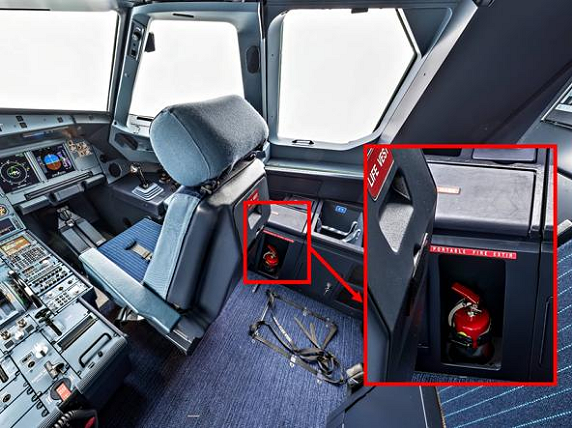
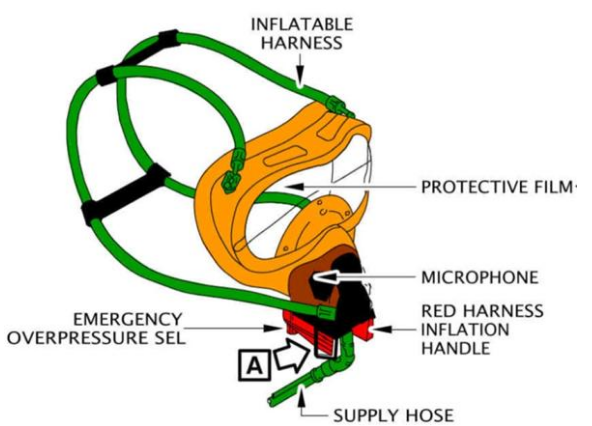
Separating the sound tracks of one of the black boxes, the "Cockpit voice recorder", the experts discover two rustles at 2.25 and 24 seconds and at 2.25 and 29 that come from the microphone embedded in the oxygen mask of the co-pilot who at that moment is in his compartment. Then two more blows, at 2.26 and 11 and at 2.26 and 24. Oxygen itself is not flammable, but promotes combustion. For this reason, immediately afterwards there is a principle of fire unleashed "by a spark or a flame". The finger is pointed at a lit cigarette, the umpteenth in that aircraft if it is true that two months earlier in the cockpit the ashtrays were replaced because they were now too used. The document cannot determine whether the pilots used a fire extinguisher or not.

The checks envisaged

"When we enter the cockpit among the various preliminary checks before taking off there is also that of controlling the flow of oxygen in the side masks", explains Daniele Veronelli, commander of A320 and member of the technical department of Anpac (National Association of Commercial Aviation Pilots) to the Courier. "You raise a door and test the air flow by pressing a button that pops out of the compartment. By operating the intercom you can feel the oxygen flowing because each mask is equipped with a microphone». If the crew is the first to set foot in the plane that day - he continues - "then this type of test is also carried out. If, on the other hand, you take over from your colleagues, the control is not provided, but nothing detracts from the fact that this is performed the same, it takes a few seconds».


Alarms

Are there oxygen signals on board? "When the levels drop, in one of the screens in front of the pilots the indication of the amount of oxygen is colored orange. If you are on the ground you do not take off, if you are in flight you have to decide whether to continue or divert to the nearest airport». The masks have a minimum of 15 minutes of autonomy. "There is a lever: if it is in the normal position the flow of oxygen is on demand. If, on the other hand, it is in the "emergency" position then it releases the air at a greater pressure to throw out of the mask the fumes that could enter in case of fire or smoke on board.

The tiredness of the pilots

In the document, among many things, there is a passage about pilots. Between 1.01 and 1.46 at night — when the aircraft passes between the coast of Croatia and over Athens, Greece — the technicians note, hearing the black boxes, that the commander and first officer show signs of fatigue. "A yawn is clearly audible at 1.01 and 53 seconds," it reads. Twelve minutes later "pilot and co-pilot clearly express that both feel tired from this night flight and lack of sleep." Same concept repeated at 1.46. But the documents compiled, the experts explain, "indicate that the rest times for both have been respected".

ICAO, the UN civil aviation agency, explains that it has not received any final report from Cairo. Bea, the investigative agency French, confirms the position expressed in 2018: for them the most likely hypothesis remains "a fire that broke out in the cockpit during the cruise phase that led to the loss of control of the jet".


sexta-feira, 15 de abril de 2022

NAVIGATING AROUND OTHER COUNTRIES THAT MAINTAIN BANS ON RUSSIAN FLIGHTS


Russian Roundabout: a long way to go for some expelled diplomats

Rotatória russa: um longo caminho a percorrer para alguns diplomatas expulsos

Source: FlightRadar24


ENGLISH

PORTUGUÊS

Earlier this week Spain and Greece expelled Russian diplomats from their capitals and Russia sent an aircraft to retrieve them. While Spain and Greece made a one-time exception for the aircraft to enter their airspace, the flights navigated around other countries that maintain bans on Russian flights. The total length of the flights was 15,163 km, just shy of the current world’s longest flight between Singapore and New York.

No início desta semana, Espanha e Grécia expulsaram diplomatas russos de suas capitais e a Rússia enviou um avião para recuperá-los. Enquanto Espanha e Grécia fizeram uma exceção única para a aeronave entrar em seu espaço aéreo, os voos navegaram ao redor de outros países que mantêm proibições de voos russos. A duração total dos voos foi de 15.163 km, pouco menos do voo mais longo do mundo entre Cingapura e Nova York.


 Moscow to Madrid

ENGLISH

PORTUGUÊS

The first leg of the journey took the aircraft from Moscow to Spain the very long way around. The flight needed to remain in international airspace except for its entry into Spain, more than doubling the great circle distance between the two cities.


A primeira parte da viagem levou a aeronave de Moscou para a Espanha no caminho muito longo. O voo precisava permanecer no espaço aéreo internacional, exceto por sua entrada na Espanha, mais do que dobrar a grande distância do círculo entre as duas cidades.

              Moscow—Madrid great circle distance

3,409 km

Moscow—Madrid actual distance

7,086 km

Madrid to Athens


ENGLISH

PORTUGUÊS

Departing Madrid, the Russian plane flew a direct course out of Spanish airspace and skirted North Africa and the Mediterranean coast, avoiding Maltese and Italian airspace. After crossing Libya in to Egypt, the flight turned north for an approach to Athens.

Partindo de Madri, o avião russo voou direto para fora do espaço aéreo espanhol e contornou o norte da África e a costa do Mediterrâneo, evitando o espaço aéreo maltês e italiano. Depois de cruzar a Líbia para o Egito, o voo virou para o norte para uma aproximação a Atenas.


Madrid—Athens great circle distance

2,383 km

Madrid—Athens actual distance

3,729 km


Athens to Moscow


ENGLISH

PORTUGUÊS

The flight home from Athens took the aircraft through mostly friendly airspace. Turkey has continued to allow Russian aircraft access, including commercial flights to Turkish destinations. Once out of Turkish airspace the flight continued east, avoiding the area of Russian airspace near Ukraine that has been off limits to most flights since the Russian invasion began at the end of February.

O voo de volta de Atenas levou a aeronave através do espaço aéreo mais amigável. A Turquia continuou a permitir o acesso de aeronaves russas, incluindo voos comerciais para destinos turcos. Uma vez fora do espaço aéreo turco, o voo continuou para o leste, evitando a área do espaço aéreo russo perto da Ucrânia que está fora dos limites para a maioria dos voos desde que a invasão russa começou no final de fevereiro.


             Athens—Moscow great circle distance

2,203 km

Athens—Moscow actual distance

4,348 km

ENGLISH

PORTUGUÊS

Additional countries have stated that Russian diplomats either will or could be expelled, so it is possible that we’ll see even more circuitous flights by Russia.

Outros países afirmaram que diplomatas russos ou irão ou podem ser expulsos, por isso é possível que vejamos voos ainda mais tortuosos pela Rússia.


domingo, 3 de abril de 2022

MU-5735 China Eastern Airlines - Demotion of five-star captain as first-officer or only as check airman flight


FLIGHT MU5735 China Eastern Airlines

by Winnie Han


Many aviation experts called the incident odd.


So far, there has been no official explanation for Zhang Zhengping’s demotion or why he was on that flight as a first officer.

Everything appeared normal except for the rank designation of the flight crew, mainly the first officer.


Gao Fei is a Chinese-American pilot with 26 years of flying experience and has a deep understanding of the culture and management in China’s aviation industry. He has piloted Boeing aircraft in both China and the United States, including the same model as the one that crashed.


On March 21, the Civil Aviation Administration of China (CAAC) confirmed a China Eastern Airlines flight MU5735 carrying 132 people crashed in Wuzhou, Guangxi—southeast China. Five days later, on March 26, the Chinese authorities said that all 123 passengers and nine crew members were killed in the crash and that the two “black box” recorders were recovered on March 23 and 27, respectively, but in severely damaged condition.


Benjamin Berman

A former National Transportation Safety Board investigator.

He said that the 737-800 is designed so that it will normally not dive at such steep angles.


Yang Hongda, the captain of the crashed plane, was 32 years old with a total flight time of 6,709 hours, while Zhang Zhengping, the first officer, was 59 years old with a total flight time of over 32,500 hours. Zhang was also a five-star captain and a recipient of the Chinese pilot’s Medal of Honor.


The culture of the Chinese aviation industry, it is highly unusual for Zhang to still be ranked as a first officer when he has flown over 32,500 hours and worked for the same company his entire life. Furthermore, Yang was a student of Zhang.


December 2018

Zhang’s career, he was 40-year veteran pilot and a mentor to young pilots. Zhang is one of the few veteran pilots of China Eastern Yunnan Airlines and has piloted four different types of aircraft.


Zhang is a “CAAC designated check airman,” one of the highest positions to be given to a pilot.


Li Ming, an old apprentice of Zhang, said he was shocked and also saddened when he saw Zhang listed as a first officer on the crew manifest.

Somehow Zhang was demoted to a first officer, losing his decorated status and taking a significant hit on his salary,” Gao said, suggesting a potential cause for emotional distress and a safety hazard for the airline.


According to public information, the average annual salary of a captain or a check airman in China was at least $120,000, while a co-pilot’s average annual salary was about $46,000, a drastic difference.


All information regarding Zhang has now been removed from the official site.


Zhang was a senior pilot of the former Yunnan Airlines, which was later forced into a merger with China Eastern Airlines. After the merger, the former employees of Yunnan Airlines, including Zhang, had a highly complex relationship with the upper management of China Eastern Airlines.


Conflict between China Eastern Airlines and the Yunnan Branch

Government-forced merger in 2002


Merging a profitable company with a loss-making company was unprecedented.


Yunnan Airlines used to be one of China’s most profitable airline companies, and its pilots were fairly well-treated. However, the pilots have reportedly experienced significant salary cuts and poor treatment after the merger.


From March 31 to April 1, 2008, pilots of the former Yunnan Airlines launched a protest against the newly merged company. Many pilots refused to land at their destinations upon arrival, citing “bad weather,” and flew their planes back to their origins. After 21 flights refused to land, the company punished 13 pilots and grounded one captain. The report did not mention whether the company has improved its treatment of employees after the protest.


PSYCHOLOGIC CREW STATUS - DISTRESS

Demotion of a decorated pilot without a reasonable cause could seriously affect the pilot’s mental state and pose a safety hazard.


“In a free world, with Zhang’s qualifications, any airline will offer him a high salary. In the United States, pilots can easily change jobs, but job changes in China are highly restricted and usually coupled with huge fines,” said Gao.


Chinese pilots who apply for job changes usually have to go through a lengthy litigation process without guarantee of success or are forced to hand back a massive portion of their compensation.


In November 2014, 42 airlines in China signed the “Convention on the Orderly Flow of Airline Pilots,” a pact that stipulates that the outflow rate of pilots from each company should not exceed 1 percent.


In 2017, (name preserved) a former pilot of China Eastern Airlines’ Yunnan Branch, was sued by China Eastern Airlines for $864,000 due to his resignation request. In June 2019, the court ordered him to compensate China Eastern Airlines $604,800.


“The pilot’s mental state is an important aspect of the incident investigation. I analyzed it from the perspective of the [flight] crew’s designation. I hope the Chinese authorities can disclose the real investigation results and provide a reasonable explanation instead of [covering up facts],” Gao added.


domingo, 27 de março de 2022

PICKLE FORKS CRACKS - On youth fleet of B737 NG - Severe vibration incident on a Boeing Model 737-800 series airplane


The aircraft, registered B-1791, was 6.8 years old and completed 8,986 flight cycles. It had not met the ‘pickle fork’ inspection threshold of 22,600 flight cycles.

A aeronave, registrada B-1791, tinha 6,8 anos e completou 8.986 ciclos de voo [decolagem/pouso]. Não havia atingido o limiar de inspeção do "garfo de picles" de 22.600 ciclos de voo.

“pickle forks are “designed to last more than 90,000 landings and takeoffs without cracking…and there could be dire results if the system fails”. A former Boeing engineer who asked to remain anonymous tells KOMO that the issue is especially concerning as it was found relatively early in the plane’s service:

"Garfos de picles” são projetados para durar mais de 90.000 pousos e decolagens sem quebrar... e pode haver resultados terríveis se o sistema falhar". Um ex-engenheiro da Boeing que pediu para permanecer anônimo diz à KOMO que o problema é especialmente preocupante, pois foi encontrado relativamente cedo no serviço do avião:

“It’s unusual to have a crack in the pickle fork. It’s not designed to crack that way at all. Period.”

"É incomum ter uma rachadura no garfo de picles. Não foi feito para quebrar dessa forma. Ponto final."

Cracks found in critical part (called a pickle fork) that keeps wing attached to 737-NG (not MAX) fuselage. One found earlier in month, now more on other planes. Found early in plane's lifespan. Boeing & FAA scrambling to find extent of problem.

Rachaduras encontradas na parte crítica (chamada de garfo de picles) que mantém a asa presa à fuselagem 737-NG (não MAX). Um encontrado no início do mês, agora mais em outros aviões. Encontrado no início da vida útil do avião. Boeing & FAA lutando para encontrar extensão do problema.


IN THE PAST TIME 2019

NO TEMPO PASSADO 2019

Hairline cracks were found in the pickle forks of Boeing’s 737 New Generation family, which includes the 737-800, in 2019.


Rachaduras [finas como] fio de cabelo foram encontradas nos garfos de picles da família 737 New Generation da Boeing, que inclui o 737-800, em 2019.

The FAA will required operators on certain Being 737 NG jetliners to conduct inspections for structural cracks. Boeing notified the agency of the matter after it discovered the cracks while conducting modifications on a heavily used aircraft. Subsequent inspections uncovered similar cracks in a small number of additional planes. The FAA have instructed operators to conduct specific inspections, make any necessary repairs and to report their findings to the agency immediately.


A FAA exigiu que os operadores de certos jatos 737 NG realizassem inspeções para rachaduras estruturais. A Boeing notificou a agência acerca do assunto depois que descobriu as rachaduras enquanto conduzia modificações em uma aeronave muito usada. Inspeções subsequentes descobriram rachaduras semelhantes em um pequeno número de aviões adicionais. A FAA instruiu os operadores a realizar inspeções específicas, fazer os reparos necessários e informar suas descobertas à agência imediatamente.


Pickle Forks Cracks

Rachaduras de Garfos de Picles

Named after the utensil used to pierce and handle pickles, pickle forks are the component that attach the plane’s body to its wing structure. These components help to “manage the stress, torque and aerodynamic forces that bend the connection between the wings and the body of the jet”.

Com o nome do utensílio usado para perfurar e manusear picles, garfos de picles são o componente que prende o corpo do avião à estrutura da asa. Esses componentes ajudam a "gerenciar o estresse, o torque e as forças aerodinâmicas que dobram a conexão entre as asas e o corpo do jato".

The planes are supposed to make up to 90,000 flights throughout their life without such structural damages. The first inspection round showed that the problem is systematic and serious:


Os aviões devem efetuar até 90.000 voos ao longo de sua vida sem tais danos estruturais. A primeira rodada de inspeção mostrou que o problema é sistemático e grave:


The results of the first week of inspections are 5% of the inspected aircraft have cracks with the lowest flight cycle aircraft with cracks at 23,600 flights.


Os resultados da primeira semana de inspeções são que 5% das aeronaves inspecionadas têm rachaduras em aeronave com menor ciclo de voo apresentadas rachaduras em [ciclo] com 23.600 voos.


Each plane will take three weeks to repair. But the supply of replacement parts for the cracked component is limited and it may take longer to produce new ones.


Cada avião levará três semanas para ser consertado. Mas o fornecimento de peças de reposição para o componente rachado é limitado e pode levar mais tempo para produzir novas.


It is not clear yet what causes the cracks in the forged aluminum part. Many older NG were retrofitted with winglets on the tips of their wings. These may have led to unforeseen loads or vibrations. It is possible that some of the younger 737 NG airplanes have a similar problem.


Ainda não está claro o que causa as rachaduras na parte de alumínio forjado. Muitos NG mais velhos foram adaptados com “winglets”nas pontas de suas asas. Isso pode ter levado a cargas ou vibrações imprevistas. É possível que alguns dos aviões mais jovens de 737 NG tenham um problema semelhante.


BACKGROUND

FROM: THE BOEING COMPANY
TO: Boeing Correspondence (MOM)
[MESSAGE NUMBER:MOM-MOM-19-0536-01B] Multi Operator Message
MESSAGE DATE: 30 Sep 2019 1731 US PACIFIC TIME / 01 Oct 2019
0031 GMT
This message is sent to all 737NG Customers, Regional Directors,
Regional Managers and Boeing Field Service Bases.
CATEGORY: Maintenance, Engineering, Flight Operations, Safety,
Regulatory
SERVICE REQUEST ID: 4-4593495493
ACCOUNT: Boeing Correspondence (MOM)
DUE DATE: No Action Required
PRODUCT TYPE: Airplane
PRODUCT LINE: 737
PRODUCT: 737NG
ATA: 5300-00

This message is sent to advise all 737NG operators of a Safety
Service Related Problem (SRP) which will result in an Alert
Service Bulletin 737-53A1395. This message provides 737NG
operators with inspection details, inspection methods, and an
inspection results report example, prior to the release of
Service Bulletin. The Boeing Company requests that operators
report back to The Boeing Company the inspection results, even
if there is no crack finding. The Boeing Company anticipates
that the Federal Aviation Administration (FAA) will mandate the
actions defined in this multi-operator message (MOM) through the 
Immediate Adopted Rule (IAR) process.


SUPPLEMENTARY INFORMATION: On June 2, 1999, the FAA received a report of a severe vibration incident on a Boeing Model 737-800 series airplane, which had accumulated 3,517 total flight hours and 1,284 total flight cycles. The airplane was involved in a high-speed descent with speed brakes extended while operating at an airspeed of 320 knots. During the descent, severe vibration occurred at 250 knots. At 230 knots, the speed brakes were retracted and the vibration stopped. The landing was uneventful.

Inspection of the airplane revealed that the upper flange of the right elevator tab mast fitting, to which the elevator tab push rods are attached, was found fractured. The lower flange of the fitting was not damaged. In addition, excessive freeplay in the elevator tab also was observed and measured during the inspection.

Further analysis confirmed that the damage to the fitting was aggravated by speed-brake-induced airframe vibration. Such vibration could lead to damage of the elevator tab mast fitting, excessive freeplay in the tab, and consequent separation of the tab mast fitting from the tab. Excessive freeplay in the tab could result in severe airframe vibration and consequent damage to the tab, elevator, and horizontal stabilizer. Separation of the elevator tab mast fitting will result in a free tab. These conditions, if not corrected, could result in loss of controllability of the airplane.

UPDATE FOR

China Eastern Airlines flight MU5735: 

second black box found  

March 27, 2022


ENGLISH

PORTUGUÊS

The plane’s data recorder could reveal details of its speed and altitude before it crashed in southern China

O gravador de dados do avião pode revelar detalhes de sua velocidade e altitude antes de cair no sul da China.

The black box was found buried under 1.5 meters of soil and will be flown to Beijing for analysis, state broadcaster CCTV reports

A “caixa preta” foi encontrada enterrada sob 1,5 metros de solo e será levada para Bejing para análise, informa a emissora [chinesa] estatal CCTV.

"Recovery workers have found the second black box of China Eastern Airlines flight MU5735 , Chinese state broadcaster CCTV reported on Sunday, potentially offering vital clues about the accident in which 132 people died. The flight data recorder was found around 9.20am buried about 1.5 meters (5 feet) under the soil at the mountainous crash site in the southern Chinese region of Guangxi, the report said. “It was cylindrical and covered in soil,” Chen Xiaohui, the deputy commander of the fire brigade in the regional capital Nanning, told CCTV.


"Os trabalhadores da recuperação encontraram a segunda “caixa preta” do voo MU5735 da China Eastern Airlines, informou a emissora estatal chinesa CCTV neste Domingo [27/03], potencialmente oferecendo pistas vitais sobre o acidente em que 132 pessoas morreram. O gravador de dados de voo [FDR] foi encontrado por volta das 09:20 horas [Hora Local] enterrado a cerca de 1,5 metros sob o solo no local montanhoso da queda na região sul de Guangxi na China, segundo o relatório. "Era cilíndrico e coberto de barro", disse Chen Xiaohui, vice-comandante da brigada de incêndio na capital regional Nanning, à CCTV.

The device will be flown to Beijing for data analysis alongside the cockpit voice recorder, which was found on Wednesday. The flight data recorder stores important data such as the flight path, speed, altitude and engine power, which can reveal whether human error or instrument problems could have contributed to a crash. Searchers had been using metal detectors to look for the device in hilly countryside near Wuzhou city. 


O dispositivo será levado para Pequim para análise de dados ao lado do gravador de voz do cockpit, que foi encontrado na Quarta-feira [23/03]. O gravador de dados de voo armazena dados importantes, como a rota de voo, velocidade, altitude e potência do motor, que podem revelar se erros humanos ou problemas de instrumentos podem ter contribuído para uma queda. Os pesquisadores estavam usando detectores de metais para procurar o dispositivo em um campo montanhoso perto da cidade de Wuzhou.